
How Michigan Freeze-Thaw Cycles Damage Concrete (and How to Prevent It)
If you've lived in Metro Detroit for a few winters, you've seen it: driveways with flaking surfaces, sidewalk slabs that heave and settle, and patios with cracks that seem to grow every spring. Most of that damage isn't from one big storm. It comes from the freeze-thaw cycle — water getting into concrete, freezing, expanding, thawing, and doing it again, over and over, all winter long.
Southeast Michigan is especially hard on concrete because our temperatures bounce above and below freezing so often between November and April. Here's what's happening, what it looks like, and what you can do — whether you're planning new concrete or trying to protect what you have.
What the freeze-thaw cycle actually does
Concrete looks solid, but it's full of tiny pores and capillaries. Rain, snowmelt and salty slush soak into those pores. When the temperature drops below freezing, that water turns to ice and expands. The expansion pushes outward on the concrete from the inside.
One cycle doesn't do much. But a Michigan winter brings many of them. Each one widens microscopic cracks a little more, lets in a little more water, and sets up the next round. Over time you get visible damage.
The same thing happens underneath the slab. If the soil below holds water and freezes, it can lift the concrete (frost heave). When it thaws, the slab settles — often unevenly. That's why you see sidewalk panels that no longer line up and driveways that develop trip edges.
Signs of freeze-thaw damage
- Scaling or flaking: The top layer peels off in thin flakes, exposing rougher stone underneath. Very common near garage doors and where salt is used.
- Spalling: Larger chips or pieces pop out of the surface or edges.
- Pop-outs: Small cone-shaped holes where an aggregate stone near the surface broke loose.
- Cracks that grow: Hairline cracks that widen each spring.
- Heaving and settling: Slabs that rise, tilt, or sink, creating uneven joints.
- Standing water: Puddles that sit on the surface, which means more water soaking in.
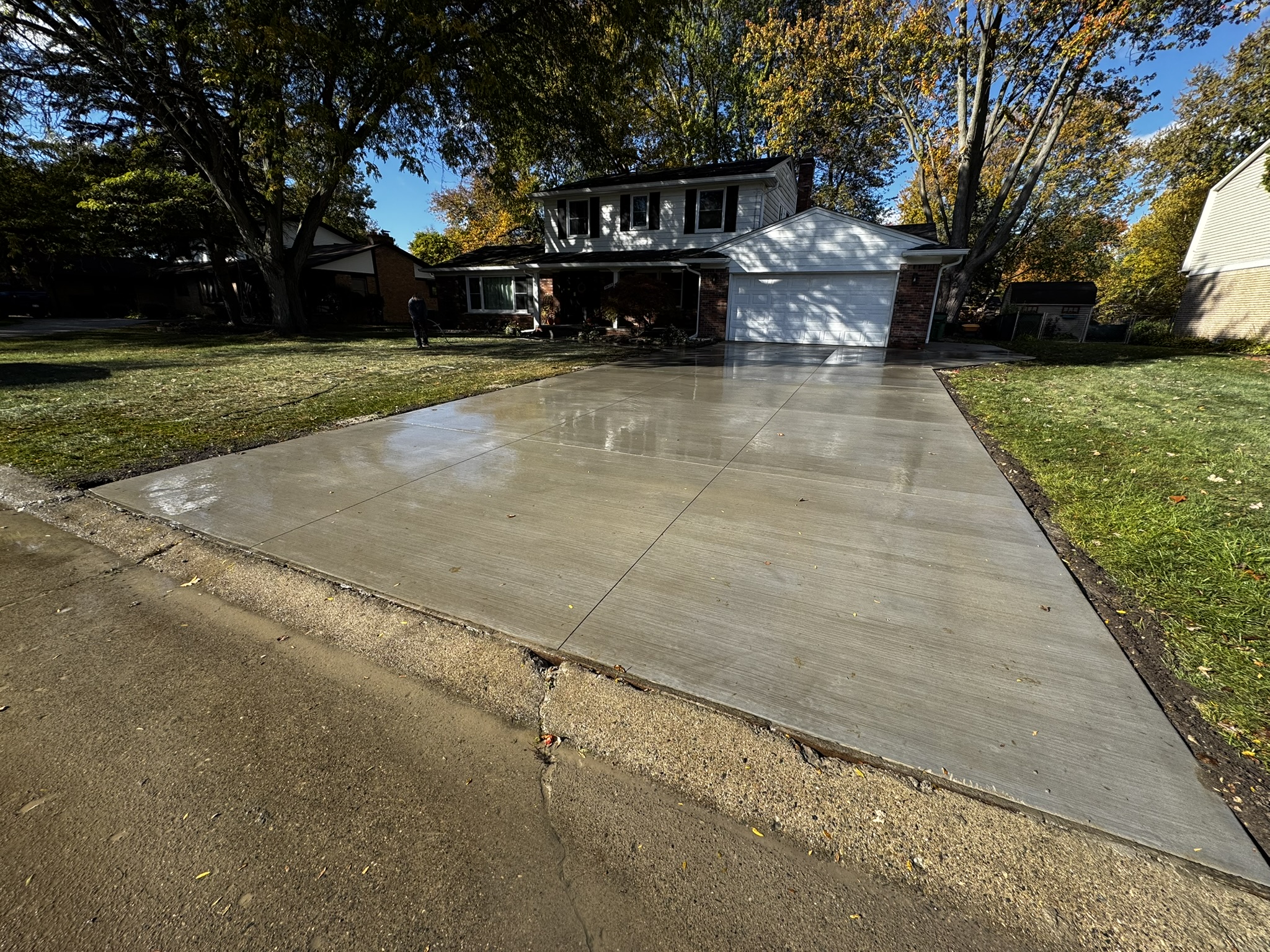
How good installation prevents freeze-thaw problems
Most freeze-thaw resistance is built in on the day the concrete is poured. If you're planning a new driveway, patio or sidewalk, these are the things that matter most.
Air-entrained concrete
Air-entrained concrete contains a huge number of microscopic air bubbles mixed in on purpose. Those bubbles give freezing water somewhere to expand into, relieving the pressure that causes scaling. For exterior concrete in Michigan, an air-entrained mix is the standard. Ask your contractor whether they use one.
Proper base and compaction
A well-compacted gravel base drains water away from the bottom of the slab and gives it even support. Poor base prep is one of the most common reasons slabs heave and settle. The base matters as much as the concrete.
Slope and drainage
Concrete should be pitched so water runs off instead of pooling. Driveways should drain away from the garage and house; patios should slope away from the foundation. Less standing water means less water soaking in.
Control joints
Concrete will crack — joints tell it where. Properly spaced and cut control joints keep cracking neat and in line instead of random.
Curing and timing
Concrete gains strength as it cures. A slab poured right before a hard freeze, or allowed to dry out too fast, can end up with a weaker surface that scales sooner. Timing and curing methods matter, especially for fall pours.
How to protect the concrete you already have
Be careful with de-icers
Rock salt (sodium chloride) adds to freeze-thaw stress and is hard on newer concrete. Avoid de-icers containing ammonium nitrate or ammonium sulfate, which can chemically attack concrete. Many contractors recommend skipping chemical de-icers entirely during a slab's first winter and using sand for traction instead. Our upcoming post on winter concrete care goes deeper on this.
Shovel early and often
Removing snow before it melts and refreezes reduces the amount of water sitting on and soaking into the surface. Use a plastic shovel or one with a rubber edge to avoid gouging.
Seal it
A quality penetrating sealer reduces how much water and salt soak in. Every Veteran One Contracting concrete job includes cure-and-seal applied after finishing. For older concrete, ask a contractor which sealer suits your slab and how often to reapply.
Keep water moving
Make sure downspouts discharge away from driveways, walks and patios, and fix low spots where water collects.
Address cracks early
Sealing cracks before winter keeps water from getting into them and widening them. Small fixes now can delay bigger repairs later.
When repair stops making sense
If a slab is heavily scaled across most of its surface, has multiple sections heaving or sinking, or has wide structural cracks, repairs may only buy a season or two. At that point, tear-out and replacement with proper base prep and an air-entrained mix is often the better investment. A contractor should be able to walk the slab with you and explain honestly which way makes sense.
Frequently asked questions
Is some cracking normal in Michigan concrete?
Yes. Concrete shrinks as it cures, and control joints are there to manage that. Hairline cracks are common. Cracks that widen, shift, or create height differences are worth having looked at.
Can I use salt on a new driveway?
It's best to avoid chemical de-icers on new concrete during its first winter. Use sand for traction and shovel promptly.
Does sealing prevent all freeze-thaw damage?
No. Sealer reduces water and salt absorption, which helps, but it can't make up for a poor mix, base or drainage.
What's the best time of year to pour concrete in Michigan?
Spring through fall generally works best. Late-fall pours are possible with the right precautions, but timing around freezing weather matters.
Plan your next concrete project the right way
Veteran One Contracting is a veteran-owned concrete contractor based in Royal Oak, serving homeowners across Oakland, Macomb and Wayne Counties. We build driveways, patios, stamped concrete, sidewalks and flatwork with Michigan winters in mind, from base prep to finishing and curing. Every VOC concrete job includes fiber mesh in the mix and a cure-and-seal finish.
Learn more about our concrete driveways, concrete patios, stamped concrete and sidewalks and flatwork, or call (248) 629-1386 for a free estimate.
